
The Law on Tape: How to Secure Police Recordings the Right Way

By Jason LunsfordJason, a white man with brown hair, wears a white shirt, blue tie and black jacket.

Imagine you have a new client who comes to your office seeking help following an auto accident that involved a family member. During the initial consultation, they inform you that the police have everything on tape. As the attorney for this new client, you want to review the entire police file as part of your case investigation. The issue then becomes getting access to the recordings held by the local police department. This blog post outlines the steps an attorney must take to obtain recordings held by a police department in the State of North Carolina.

Read more

A Note from the Government & Public Sector Section Council Chair!
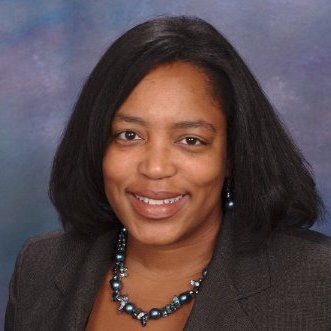
By Jasmine McGhee

My name is Jasmine McGhee. I’m honored to serve as the Chair of the NCBA’s Government and Public Sector Section this year. The work of the Section is already underway. On October 16, the Section co-sponsored a social event with the Administrative Law Section. If you weren’t able to join us, stay tuned for more membership engagement opportunities.

Our next event is our Joint Legislative CLE on Friday, November 14, again with the Administrative Law Section. You can join us in person or virtually. More information, including topics and speakers, is available online.

Four members sit at a table outside together. They are facing each other, and a brick building is behind them.

The Government & Public Sector Section members held a social on October 16 with members of the Administrative Law Section. Clockwise, from back center, Latoya Caesar-Crawford, Liz Sharpe, Administrative Law Vice-Chair Charla Burill and GraceAnna McCray.

In addition to membership engagement and CLE, this Bar Year, we are looking forward to the work of our Pro Bono, Ethics/Legislative, Professionalism, Communications, and Opportunity, Inclusion & Scholarships Committees. We are always accepting volunteers and ideas for the Section! To get involved in our Section, please send an email to our Communities Manager, LaSara Carter.

A young man with black hair wears a grey sweater and khaki pants. He is standing outside in a buffet line holding a plate of food.

NCBA members Creighton Knight, center, and Tracy Harris, back left, at the social event held on October 16.

In this challenging time for all levels of government, whether you’re in government or private practice, your work as a government attorney is as important as ever. Thank you for all that you do.

Jasmine S. McGhee serves as Deputy Chief of Staff and Senior Advisor to Governor Josh Stein. In that role, her portfolio includes Policy, Boards & Commissions, Intergovernmental Affairs & Outreach, VolunteerNC, and the North Carolina Business Committee for Education. Prior to joining the Governor’s Office, she was Senior Deputy Attorney General and Director of the Consumer Protection Division at the North Carolina Department of Justice (NCDOJ). Jasmine also established the Department’s Civil Rights Unit. Prior to serving as Senior Deputy, for six years she directed the Department’s Public Protection Section, which handled public safety and victim policy, outreach, and related litigation, including on gender-based violence, criminal justice reform, and consumer protection.

District 18’s Justice Is Blind Clerkship Opens Eyes and Minds
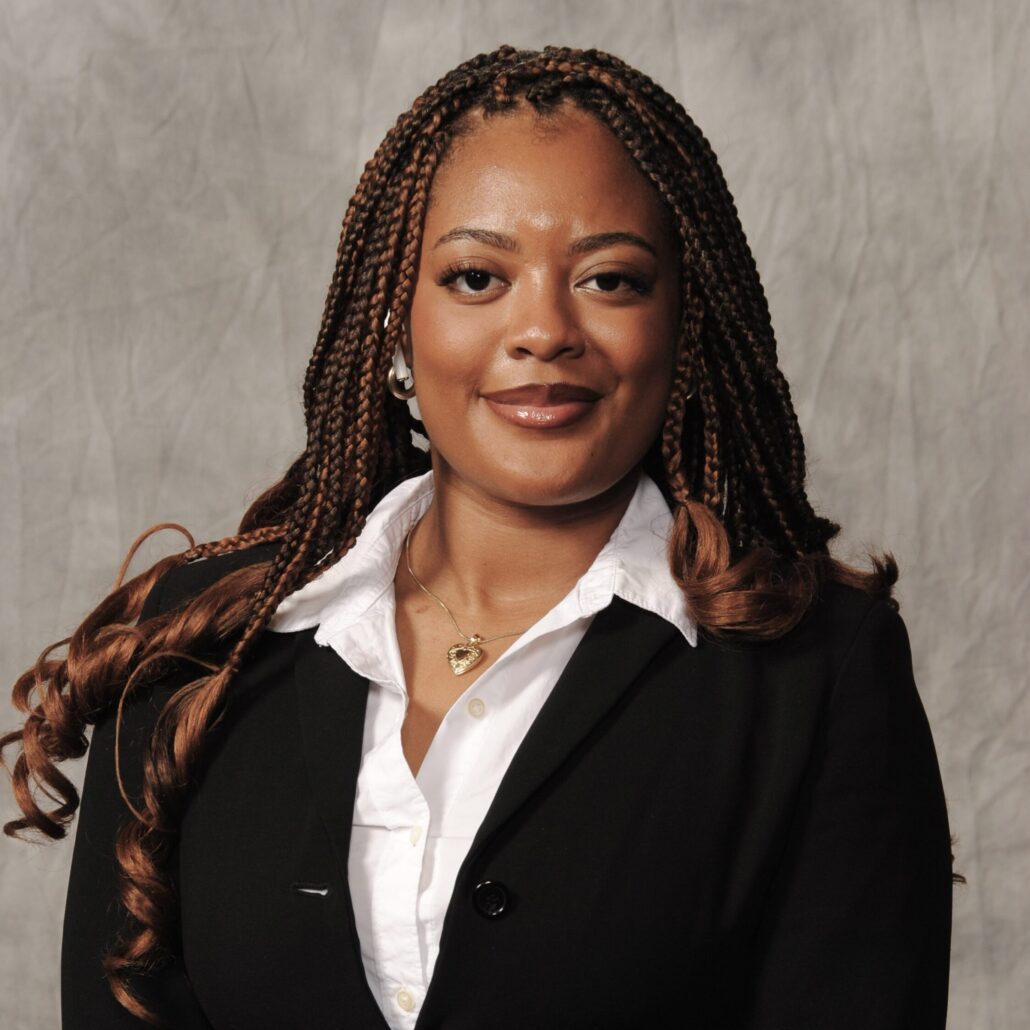
Aaliyah, a Black woman with auburn and brown hair, wears a white blouse and black suit.By Aaliyah LeCompte

This past summer, I had the opportunity to work with the judges of District 18 in a program led by Judge Scarlett and Judge Pendergrass called “Justice is Blind.” Over the course of the program, I observed many district court proceedings, spent time breaking down statutes, conducted legal research on upcoming and current cases, practiced oral advocacy and engaged in thoughtful discussions about injustice in the legal system.

Before starting the clerkship, I was assigned books, podcasts, and even a movie about different historical injustices. These materials helped to frame the issues for me. They also served as a foundation for challenging lunchtime conversations and for open-minded observation of court proceedings throughout the summer. I learned that, while each judge has a unique way of presiding over a courtroom and doing the hard work of understanding the nuances of the law, each judge must also grapple with the nuances of systemic issues. Throughout the internship, my fellow clerk and I practiced oral advocacy by arguing hypothetical cases. We would work on the structure before each practice and receive feedback afterward. At the end of the internship, we each chose an old DWI case to give a closing argument to one of the judges. At this point, we were well versed in the evidentiary requirements needed to meet the standards set forth in N.C.G.S. § 20-138.1. The challenging part was arguing before the judge, as well as other observers, which included several other judges, attorneys and others. After I finished and could breathe again, I received better feedback than I had expected. I felt proud to do something I had not even imagined would be possible just a few months before.

Read more

How to Apply for Admission to Federal Courts

By Kayla BrittKayla, a white woman with auburn hair, wears a paisley colored burgundy top and burgundy blazer.

Efficiency is a lawyer’s best friend. Below, you will find a cheat sheet with information and resources you need to apply for admission to the United States District Courts of North Carolina, the United States Court of Appeals for the Fourth Circuit, and the Supreme Court of the United States, with links to the various courts’ websites.

Before you begin digging through the requirements, you should verify whether your employer is willing to handle the application process and/or pay the fees on your behalf.  Also, you must be a member of the Supreme Court of North Carolina (or another state) for three years before you can apply for admission to the Supreme Court of the United States.

Read more

“Yellowstone” Meets North Carolina: Condemnation Law on the Ranch and the Road

By Kayla BrittKayla, a white woman with auburn hair, wears a paisley colored burgundy top and burgundy blazer.

Television dramas rarely get the law exactly right, but sometimes they spark conversations that resonate with those of us in practice. The series Yellowstone explores struggles over landownership, government power, and private rights in a way that reaches beyond Montana. While the show takes liberties, its themes echo real issues in North Carolina condemnation law.

In Yellowstone, the Dutton family resists outside efforts to take or control their ranch. Condemnation, or eminent domain, is portrayed as a weapon of powerful interests. The narrative is heightened for television, but the underlying legal principle is familiar. The government may acquire private property for public use if just compensation is provided.

Read more

Harnessing the Potential of Early Career Attorneys in a Municipal Law Office

Sofia, a woman with dark brown hair and brown eyes, wears a blue blouse and glasses. By Sofia Hernandez

Look around any municipal law conference, and it is clear that the municipal field tends to hire mid-to-late career attorneys. But how does an office build long-term institutional knowledge and bring in new ideas if it only hires from certain age and experience groups?

Prior to my hiring at the Durham City Attorney’s Office (CAO), the youngest person in our office was 49 years old. Let me be clear, as someone who has recently joined the over-forty club, I am not implying that someone in their forties is out of new ideas. However, having supervised dozens of interns and externs and taught classes at a law school, I have witnessed very different approaches to office culture and client services from those who are 25+ years out of law school than those who are 25 years old. Both bring value to a diverse and thriving office. So how does the municipal field actively work to harness the potential of early career attorneys to better serve local governments?

Read more

NCBA + NCDOJ On-Demand Panel Series

Kayla, a woman with dark brown hair, wears a pale pink blouse, bright pink jacket, and gold fairy pin on the lapel.By Kayla Britt

The North Carolina Bar Association’s Government and Public Sector Section is proud to present the North Carolina Department of Justice (NCDOJ) On-Demand Panel Series, a valuable resource for law students and lawyers interested in public sector legal practice. This series offers insights into the various sections and divisions within the NCDOJ, including Appellate and Post Conviction, Tort Claims, Public Assistance, Labor, Environmental, and Consumer Protection.

Read more

My Summer With North Carolina Prisoner Legal Services: A Reflection on Public Service Law

Tavaria, a Black woman with black hair, wears a white shirt and black blazer.By Tavaria Smith 

This summer, I had the privilege of working with North Carolina Prisoner Legal Services (NCPLS), an organization committed to providing legal assistance to incarcerated individuals in North Carolina. My internship offered me a front-row seat to the criminal justice system, from observing court proceedings to directly engaging with clients and their families. This experience not only solidified my commitment to a career in public service law but also deepened my understanding of the challenges and rewards of advocating for those who are often voiceless.

Exploring the Work of NCPLS: Insight into Post-Conviction Advocacy

During my internship, I was involved in a range of activities that exposed me to the complexities of criminal defense and post-conviction advocacy. One of my key responsibilities was to assist with various post-conviction assignments, including the preparation of a mitigation packet. This involved reviewing case files, researching legal precedents, and drafting documents that could be used to argue for reduced sentences or other forms of relief for incarcerated clients. I also had the opportunity to observe court hearings and trials, which allowed me to see firsthand the legal strategies used by attorneys and the decision-making processes of judges.

Read more

A Look Into My Internship With the North Carolina Innocence Inquiry Commission

By Shane Murphy Shane, a man with black hair, wears a white shirt, black tie and black blazer.

Working as an intern at the North Carolina Innocence Inquiry Commission, I’ve had the unique opportunity to contribute to the critical work of investigating post-conviction claims of innocence. This experience has been both challenging and rewarding, offering insights into the complexities of the criminal justice system and the meticulous process of seeking truth and justice. This is the type of role that I believe is only possible in a public-sector position, where an agency like the Commission can operate on their charge without financial motives.

One of main responsibilities I had during my internship was assisting in the evaluation of innocence claims. This process is far more intricate and demanding than I initially imagined. Each claim requires a thorough, objective analysis that often involves sifting through mountains of documentation. When a new claim comes in, we would start by reviewing the initial application. This document provides an overview of the case and the basis for the innocence claim. From there, we dive into the case files, which include trial transcripts, police reports, forensic analyses, and any post-conviction filings.

Read more

A Look Into My Internship With the U.S. Department of Veterans’ Affairs Office of General Counsel

Sadie, a white woman with light brown hair, wears a navy blue sleeveless dress. By Sadie Pruett 

After previously interning with the Committee on Veterans’ Affairs in the U.S. House of Representatives and with the Department of Defense, I have actively sought internships involving advocacy for veterans since 2020. Four years later and in my 1L year at Wake Forest Law, I took advantage of the opportunity to intern in the Office of General Counsel for the U.S. Department of Veterans Affairs.

Read more