
Planting Seeds in the Desert: Interviews with Legal Oasis Interns
This year, a number of stakeholders — including representatives from the North Carolina Bar Association Professionalism Committee, the Chief Justice Commission on Professionalism, North Carolina State Bar Councilors and leadership of the North Carolina State Bar, Lucy Campbell, Executive Director of the North Carolina Judicial Fellows, Carla Huff, Recruitment and Training Coordinator with Indigent Defense Services, and the North Carolina Conference of District Attorneys — and some generous private donors joined together to help coordinate placing law students in underserved communities through the Legal Oasis Internship.
Currently, there are forty-four interns who receive a stipend of $500 per week for up to ten weeks. An additional thirty-three interns have been placed, but these interns do not receive a stipend from the Legal Oasis Internship program. The interns are working with law firms, trial judges, local public defender offices and district attorney offices. The goal is to place interns in underserved areas where they would like to consider living and working.
For three years, Kimberly Spahos, Executive Director of the North Carolina District Attorneys Conference, has managed an internship program for district attorney offices across the state. Two hundred ninety-six interns have participated in this program. Seventy-nine percent of these interns are now licensed attorneys working in various district attorney offices across the state. As a result of these new assistant district attorneys, the vacancy rate in district attorney offices across the state has decreased from 15% to less than 5%.
The Legal Oasis Internship hopes to obtain similar results.
Over the next few months, the Professionalism Committee will publish interviews with some of these interns and their mentors in which they discuss their participation in this program and why they choose to live and serve in an underserved area. It is our hope that others will be inspired by their stories.
The first post is an interview with Richard Williams, a rising 2L at the Kenneth F. Kahn School of Law, High Point University. Richard is working with the Alamance County Public Defender and is being mentored by Rebecca Greene, an Assistant Public Defender in that office.
The interview was conducted by James S. Perry, a small-town practitioner in Kinston. Perry is also on the Professionalism Committee with the NCBA and is currently the Executive Director of the Chief Justice Commission on Professionalism.
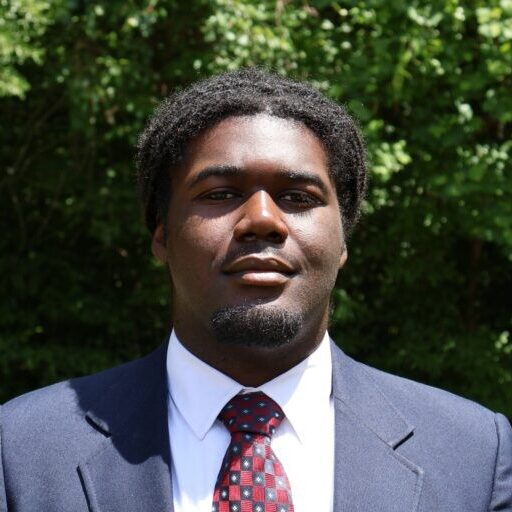
Richard Williams, Intern
Family Background
My family comes from two different cultural backgrounds. On my mother’s side, we are from the Ivory Coast. She was born in Abidjan so we still have family there, and we visit whenever we can. We speak French because the Ivory Coast is a francophone as they were colonized in the past by France. My father is from South Carolina, born and raised. He lived in South Carolina until around his early twenties, which is when he began traveling into North Carolina. So, that means I have family both in the “south” of the U.S and in Africa. I grew up in Greensboro North Carolina, with my middle brother, and I am the youngest of three.
Why did you come to law school?
I came to law school because making a difference in my community and giving back matters the most to me. Getting into Law School was a blessing and the work I’ve put in has made me appreciate Law School more and more. Knowledge is wealth, and I want to share that wealth with those who need it.
What is your summer internship?
I will be working at the Public Defender’s Office of Alamance County in District 17.
Why did you choose to work in a public defender’s office this summer?
I wanted an internship which would allow me to gain the most experience in the small amount of time I have during my summer break. Working at the Public Defender’s office has allowed me to not only do so, but I’ve been able to speak with clients in person, handle caseloads and even help with trials and motions in front of the judge. The experience gained here will give me the knowledge and familiarity I will need when I practice in the future.
Are you interested in doing this type of work in the future?
Yes, advocating for those who don’t quite understand the American legal system, and defending people when they don’t have the money to afford an attorney is such a great cause in my eyes because I believe everyone should have access to an attorney, and if I can be that access point for them, I’ll gladly be.
What do you hope your life will look like in the future?
I honestly just want to be that person people can come to when they need legal help or need any advice. Being someone people can look up to and rely on is what I will continue to strive towards.
Attorney Rebecca Greene, Mentor
Family background
I grew up in Bondsville, Massachusetts, which still doesn’t have a stoplight. A Caucasian community, my family moved there from the big city of Wister, Oklahoma when I was four, and we were all treated like outcasts. I’m the youngest of six kids, one of my brothers is a chief of police in Massachusetts and my oldest brother is the head of transportation in Massachusetts. I was the first to finish college.
Why did you come to law school?
I went to law school because I took a prelaw class at UMass and completely fell in love with the law. I saw how you could right the wrongs through the justice system, and I wanted to be an advocate for victims and protect everybody’s rights.
Where do you work?
The Public Defender’s Office of Alamance County, District 17.
Why did you choose to work in a public defender’s office?
I just feel like this is my purpose in life. I really enjoy taking care of my clients and being able to facilitate the movement of the courtroom, its process, and be able to help people get on with their day and get things behind them. With all my experience, I have a fair amount of insight into what matters for our clients and not just trying to continue cases again and again. Sometimes having a pending charge is worse than having a resolved case when it comes to getting a job or housing and other basic life necessities.
Do you want to keep doing this work in the future?
Absolutely, I don’t have a vestment in retirement until another 23 years.
What do you hope your life will look like in the future?
Relaxed on a beach hopefully. In the next five years, I hope that we have some systems in place that will decrease our workload and hopefully clean my chairs off and maintain cleanness on my desk.