
Get to Know WIP Member Joyce Glass
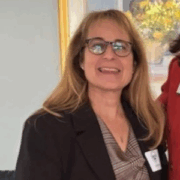
By Joyce Glass
What law school did you attend, and what year did you graduate?
Hofstra Law, 1998.
Describe what a typical workday is like for you.
A typical workday involves reading updates on case law or on pending companion animal cruelty cases. I will have calls scheduled for any cases I am advising on and take calls for any new cases being investigated and collaborate on needs for the victims (vet care, training, housing). Additionally, I will respond to emails for needs of the companion animals of domestic violence victims if placement is needed. I may also be preparing for an upcoming presentation with research, reviewing slides and practicing presenting. If I am working on legislation, I will review and revise the language as part of the drafting process.
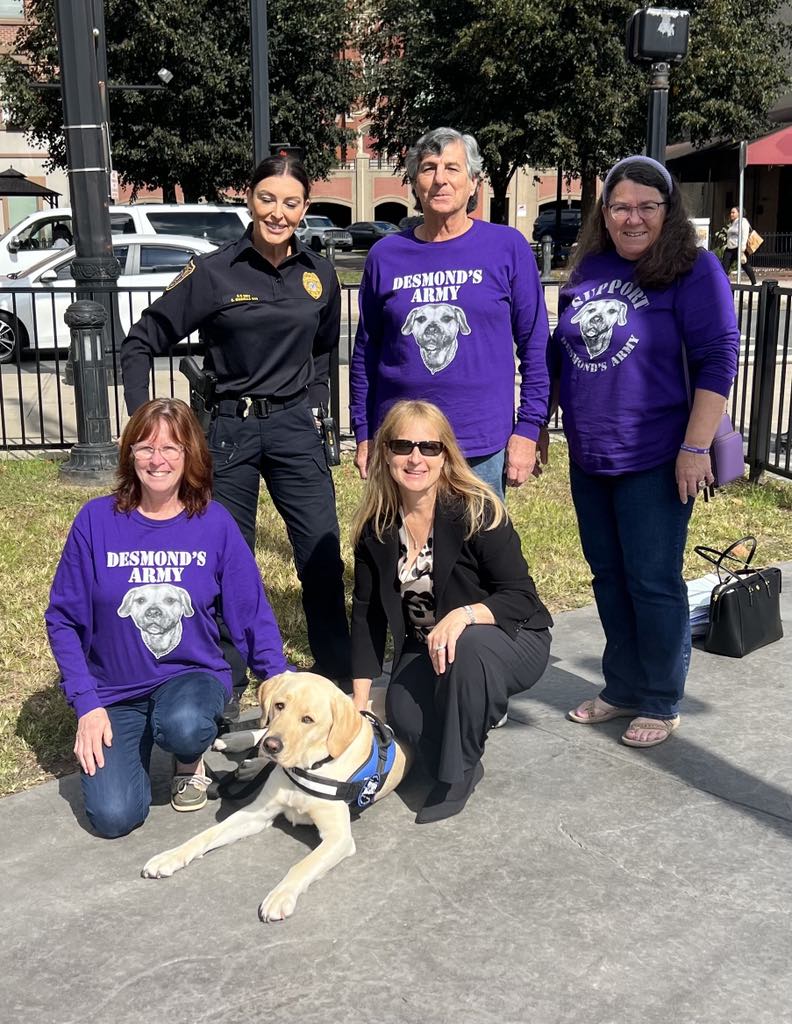
Joyce, bottom row, right, attended an event on October 3, 2025, where she discussed her plan to propose a state bill for the cross-reporting between animal welfare agencies and The Department of Social Services.
Describe what you like to do outside of work.
My family is always my first priority. We love to travel, watch movies, take walks with our dogs and look for new experiences. Recently, we took our first hot air balloon ride, visited Jay Leno’s garage in California and experienced the racetrack at Nürburgring.
Please describe a barrier or obstacle you have faced in your professional career.
After 16 years as a bankruptcy practitioner, I made a huge shift to pro bono companion animal law. This was, and is, an emerging field that always has a human connection. Early on, the speedbumps (as I call them) were getting meetings with agencies who could address these issues. Education on the necessity to properly address these crimes, for the sake of both humans and animals, is the starting point for any stakeholder. But, after I conducted a lengthy shelter investigation in New York (a trial-by-fire experience), I met prosecutors and law enforcement who, 13-plus years later, remain some of my biggest allies. Those relationships have assisted in cases in North Carolina and Connecticut. Perseverance, preparation and passion have consistently overcome the speedbumps I encounter.
Please describe your reasons for becoming involved in WIP.
I think women can and should be a resource for other women in this profession. We often have more in common than we know and face similar situations. Being an ear or lending a hand can impact someone significantly.