
Planting Seeds in the Desert: Interviews with Legal Oasis Interns (Part 13)

In this blog post series, interns who are participating in the Legal Oasis Internship program discuss their participation in the program and why they choose to live and serve in an underserved area. Background on this program can be found in the initial blog post of this series. It is our hope that others will be inspired by these stories.
This post in this series is an interview with Christian Rios, a second-year law student at North Carolina Central University School of Law.
The interview was conducted by James S. Perry, a small-town practitioner in Kinston. Mr. Perry is also on the Professionalism Committee with the NCBA and is currently the Executive Director of the Chief Justice Commission on Professionalism.
Rios spent this past summer as a summer intern in Judicial District 39 (Cleveland and Lincoln Counties) Public Defender’s office.
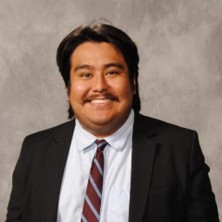
Christian Rios
Could you share about your background?
I was born in Dallas, Texas, but moved to North Carolina when I was only four. I grew up in North Carolina, but I spent most of my summers and vacations in Texas with my family. For my undergraduate degree, I went to the University of North Carolina at Charlotte, where I double majored in political science and history and minored in American Studies. I graduated in December 2022. I took two years off where I worked as a paralegal and for Coke Consolidated before I started at North Carolina Central University School of Law.
Why did you go to law school?
Ever since I was a child, I knew I wanted to be an attorney. Growing up, I was exposed to the harsh realities of the communities that needed legal assistance the most. I saw how people I was the closest to, family and close family friends, struggle with complex legal issues. The legal field is dense enough as it is, but for people who often had no higher education than some middle school or sometimes less, it was overwhelming. They became completely entangled in the process, suffocating under legal jargon, financial fees and even the loss of their freedom over concepts they struggled to comprehend. I promised myself at a young age that I would help every person who came to me for legal assistance once I became an attorney. Whenever I see or hear someone navigating this complex, ever-changing legal system, I see my own family and friends who had to overcome the same difficulties.
I understand that you are a Legal Oasis Intern this summer. What have you done specifically? Please share some of your experiences.
During my time as a Legal Oasis Intern, I’ve had such meaningful and valuable experiences that will forever change the way I think about what it means to be an attorney and furthermore, what I want to do once I become an attorney. One of the most impactful times I had in District 39 was drug treatment court. In drug treatment court, clients were given a chance to receive suspended jail time if they willingly enter an inpatient treatment where they go through detox, counseling, begin working and slowly adjust to a life past addiction.
I had the pleasure of going to a graduation ceremony for the clients who finished the treatment court and were going to get released as new people — a whole slate wiped clean. At the ceremony, I saw how the same judges who had previously sentenced them to jail congratulated them for looking healthier, beating their addiction and letting them know they not just overcame their addiction for themselves but for their families. I was proud of these strangers despite just having met them. I promised myself no matter what type of law I practiced, I would find time to volunteer to help these clients because to save a life is to save the world whole. Another amazing part of my experience that I recall from my time as a Legal Oasis Intern is the amount of front-facing client time I got. During my last two weeks of my internship, I was able to help an attorney with trial prep, jury selection and helping our client navigate all these complex terms and rules in layman’s terms.
How has your experience this summer impacted what you want to do in the future?
As mentioned before, one of the biggest changes that this internship has positively impacted is my decision to continue in drug treatment court. Addiction is a serious topic and issue in our country, and specifically, in rural underserved areas like where I interned at, the issue is rampant. Thus, I was able to firsthand see how destructive addiction can be and how debilitating it can be. Despite what people may think, addiction is not a choice, and our clients are suffering from an awful, life-threatening disease. If I could change one person’s life with my legal skills to help them get into drug treatment court, and more importantly successfully complete it, I will consider my legal career a success.
Would you encourage other students to consider being a legal oasis intern
Absolutely! Coming into law school, you hear so much of big law, competitive salaries and other terms meant to scare future attorneys from underserved areas. But these underrepresented areas have your family, your friends, your loved ones. The district I served is only 30 minutes from where my parents live. These areas need legal representation, and they need competent attorneys — attorneys who can reject the allure of big law and working in a competitive workplace. My recommendation is applying if it’s something that you’re interested in. See how communities that need legal representation function and how much your decision to stay in that area can impact hundreds of lives for the better.