
Planting Seeds in the Desert: Interviews With Legal Oasis Interns (Part 2)

In this blog post series, interns who are participating in the Legal Oasis Internship program discuss their participation in the program and why they choose to live and serve in an underserved area. Background on this program can be found in the initial blog post of this series. It is our hope that others will be inspired by these stories.
The second post in this series is an interview with Tahje Edwards, a rising 2L at the University of Baltimore School of Law. Tahje is working with District Court Judge Jamal Summey in Judicial District 7 (Bertie, Halifax, Hertford and Northampton counties).
The interview was conducted by James S. Perry, a small-town practitioner in Kinston. Mr. Perry is also on the Professionalism Committee with the NCBA and is currently the Executive Director of the Chief Justice Commission on Professionalism.
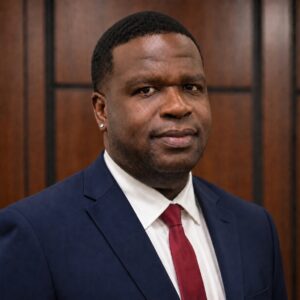
Tahje Edwards, Intern
Share about your background.
My name is Tahje Edwards, and I am a rising second-year law student at the University of Baltimore School of Law and a proud graduate of Bertie High School. I grew up in Bertie County, North Carolina, in a blue-collar community where becoming a lawyer was not something I saw every day. I am also a first-generation law student, so pursuing a legal education was largely unfamiliar territory for both me and my family.
My path to law school was anything but traditional. Before law school was ever part of my plans, I had my own encounters with the legal system. As a young man, I spent time sitting where defendants sit, facing charges ranging from traffic offenses to misdemeanor criminal matters. Looking back, I can see how easily a few decisions and circumstances could have created a much different future for me.
What makes my story unique is that many of the courthouses I now walk through as a law student are the same courthouses I once entered under very different circumstances. At the time, becoming a lawyer felt unrealistic. Today, I have completed my first year of law school and am spending my summer learning from judges, attorneys and court personnel throughout Judicial District 7.
That journey has taught me that a person’s past does not have to determine their future. Sometimes the experiences that seem like obstacles become the very foundation for future success.
Did your past life experiences impact why you are in law school? Explain how.
Absolutely.
My experiences with the legal system played a major role in my decision to attend law school. Having seen the court system from the perspective of a defendant, I developed an appreciation for how much influence judges, lawyers and other legal professionals have on people’s lives.
One of the people who had a significant impact on me was Judge Tommy Summey. He helped make the legal profession seem attainable and showed me that lawyers are real people who can positively impact their communities. Through my interactions with him and others in the legal system, I began to realize that a legal career was something I could pursue.
My experiences also taught me that a person’s circumstances at one point in life should not determine the opportunities available to them forever. I knew that my charges did not define who I was, and I became determined to build a future that reflected my potential rather than my mistakes.
Today, one of the things that motivates me most is the opportunity to help people navigate difficult situations during some of the most stressful moments of their lives. I understand firsthand how intimidating the legal system can feel when you are the one standing before it.
In many ways, my journey from appearing in court as a young defendant to becoming a law student has been the ultimate full-circle experience.
Describe your future hopes for your professional life.
My hope is to become a lawyer who serves both the legal profession and the community.
Representation matters. Growing up in a rural community, it was meaningful to see legal professionals who looked like me and came from backgrounds that felt familiar to my own. Seeing that representation helped me believe that success in the legal field was possible.
I hope to be that example for someone else one day. Just as judges, attorneys, and mentors helped influence my path, I would like to encourage young people who may not see themselves reflected in the legal profession.
Whether I ultimately practice criminal law, public service, or another area of law, I want to build a career centered on integrity, professionalism and service. I want to be known as someone who uses the law to help people while strengthening the communities that helped shape me.
I would also like to help demonstrate that talent, intelligence and potential can come from anywhere. Students from small rural communities deserve to see examples of people who came from backgrounds similar to their own and successfully pursued professional careers.
What are you doing this summer?
This summer, I am participating in a judicial internship within North Carolina’s Judicial District 7 through the Legal Oasis program.
The internship has provided me with the opportunity to observe a wide variety of court proceedings, including criminal court, family court, child support court, traffic court, juvenile matters and other judicial proceedings. I have spent time learning from judges, attorneys, clerks, magistrates, and court professionals while gaining a better understanding of how the justice system operates on a daily basis.
One of the most valuable aspects of the experience has been seeing how legal principles learned in law school are applied in real courtrooms and real cases that affect real people. Every day presents an opportunity to learn something new and deepen my understanding of the legal profession.
The experience has also allowed me to build relationships with legal professionals throughout Judicial District 7 while learning from individuals who are deeply committed to serving their communities.
Describe how this summer is impacting your future plans.
This internship has reinforced my desire to serve communities like the ones where I was raised.
Spending the summer in Judicial District 7 has given me a firsthand look at the legal community in eastern North Carolina. There is a strong sense of connection and community here that has made a lasting impression on me.
The experience has also allowed me to see what a career in public service can look like. Observing judges and attorneys who are deeply committed to their communities has given me a greater appreciation for the role lawyers play beyond simply handling legal cases.
Most importantly, this summer has given me a clearer vision of what may be possible after law school. While I remain open to opportunities wherever my career may take me, my experiences in District 7 have made me excited about the possibility of one day returning home and serving the communities that invested in me.
For someone who grew up here, there is something special about learning from the very legal system that helped shape my own journey. It has made me appreciate how important it is for talented professionals to return home and contribute to the communities that helped them succeed.
What does a full-circle moment mean to you?
A full-circle moment is being able to walk through the same courthouse doors under completely different circumstances.
Years ago, I entered courthouses focused on the outcome of my own cases. Today, I enter those same buildings as a law student learning from judges, attorneys, and court personnel.
Some of the legal professionals I now work with and learn from knew me before law school was ever part of my life. They saw potential in me when I was still trying to figure things out for myself. That perspective keeps me grounded.
It reminds me that people are capable of growth.
A person’s worst day does not have to become the defining chapter of their life.
Most importantly, it reminds me that opportunities can change lives when people are willing to invest in others.
What message would you give to students who may be facing obstacles in their lives?
Do not allow your current circumstances to define your future.
Many students face challenges, setbacks and situations that make them question what is possible for their lives. I understand that feeling because I have experienced it myself.
If someone had told me years ago that I would one day complete my first year of law school and spend a summer learning from judges in the same court system where I once appeared as a defendant, I probably would not have believed them.
Programs like Legal Oasis are important because they expose students to opportunities they may never have considered for themselves. Sometimes all it takes is seeing someone with a similar background accomplish something you never thought was possible.
Your story is still being written. One chapter does not determine how the rest of the book ends. Keep moving forward, keep learning, and never allow anyone — including yoursel — to place limits on what you can become.