Three things for general contractors to know if you are considering a business name change.
You may want to change the “look and feel” of your company’s branding (i.e., “rebranding”) for the purpose of influencing how your company is perceived by current or potential consumers, the business community, or stakeholders. This marketing initiative might include changing the “look and feel” of your company’s name and/or logo on your website, social media, letterhead, contracts, company vehicles, commercial office space, and so on. You might think that, as long as the name on your corporate filings, legal documents, or bank accounts doesn’t change, all these other changes are simply “marketing initiatives.” But, for general contractors licensed under North Carolina law (G.S. § 87-1 et seq.), rebranding is more than a marketing initiative.
https://ncbarblogprod.wpengine.com/wp-content/uploads/2018/06/Blog-Header-1-1030x530.png00Constructionhttps://ncbarblogprod.wpengine.com/wp-content/uploads/2018/06/Blog-Header-1-1030x530.pngConstruction2025-04-29 09:09:452025-04-29 09:09:45What's in a Name?
Savannah Croxton-Zweigart didn’t set out to work in the legal field. With a Bachelor of Arts in Music from the University of North Carolina Wilmington (“UNCW”), she envisioned a future in music therapy. But life had other plans. A severe case of temporomandibular joint (“TMJ”) disorder forced her to stop playing her instrument, upending her career aspirations. That unexpected shift led her to discover an entirely new passion.
Discovering a New Passion
After graduating from UNCW in 2016, Savannah moved to Raleigh to be with her husband. Like many recent graduates, she set out to find her first “real” job, eventually landing a position as a legal assistant at a workers’ compensation and social security disability firm. While law hadn’t been on her radar, she quickly found herself drawn to the field, appreciating the fast pace, problem-solving, and, most importantly, the opportunity to help people in meaningful ways.
Encouraged by her supervising paralegal, Savannah enrolled in the Meredith College Paralegal Program. She completed the program in 2018, earned her North Carolina Certified Paralegal (“NCCP”) designation, and realized she wanted to go even further. That same year, she took the LSAT and enrolled in North Carolina Central University (“NCCU”) School of Law, all while continuing to work full-time.
The NCBA Health Law Section wants to provide you meaningful communications to help advance your practice and provide optimal value from your section membership with the NCBA. Please provide us feedback via the GoogleForm link below to help us make sure our membership is informing the type, format, and content of our communications.
https://ncbarblogprod.wpengine.com/wp-content/uploads/2018/06/Blog-Header-1-1030x530.png00HealthLawhttps://ncbarblogprod.wpengine.com/wp-content/uploads/2018/06/Blog-Header-1-1030x530.pngHealthLaw2025-04-24 15:19:342025-04-24 16:50:13Provide Your Thoughts: Feedback for Health Law Section Communications
Welcome to the future — where even serving pleadings requires a login screen.
. . .
In October of 2020, the North Carolina legislature gave Rule 5 of the North Carolina Rules of Civil Procedure a digital makeover. Rule 5, as amended, wholeheartedly embraces the electronic filing system and makes it the go-to method for serving applicable pleadings and papers. Gone are the days of sending opposing counsel an email containing your discovery requests and responses. Now, you need to log into eCourts, toss your pleading into the digital realm of Tyler Technologies, and cross your fingers.
Okay, put down your pitchforks. I know we should embrace a system that eases access to the courts.
https://ncbarblogprod.wpengine.com/wp-content/uploads/2018/06/Blog-Header-1-1030x530.png00Constructionhttps://ncbarblogprod.wpengine.com/wp-content/uploads/2018/06/Blog-Header-1-1030x530.pngConstruction2025-04-21 16:05:032025-06-05 14:52:19Navigating Rule 5: Can I Just Send You an Email?
Michael Jones has joined the firm’s Greensboro office as of counsel. His practice is focused on complex litigation, election law, and state and local government law. Before joining the firm, he served as Deputy National Director of Voter Protection and Access on the Harris for President campaign. Jones previously was an attorney in Atlanta and Washington, D.C. Jones has served as an aide to two members of Congress, including former U.S. Senator Kay Hagan of North Carolina. He graduated from the University of North Carolina School of Law and from Yale University, where he received a bachelor’s degree in political science with an Interdisciplinary Concentration in Urban Studies.
Young Moore Announces New Of Counsel Attorney
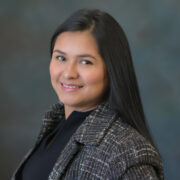
Alicia L. Bray has joined the firm. She has previous experience in defending long-term care facilities, nursing homes, physicians, nurses, and hospitals. Bray is a native of Danville, Virginia. She has more than 14 years in the health care industry in North Carolina. She has litigated insurance defense matters involving premises liability and motor vehicle accidents. She holds a J.D. from Elon University School of Law and received her undergraduate degree in English with a minor in psychology from Averett University, where she graduated magna cum laude.
Understanding the role of a paralegal within the legal system has been essential for me since I started as one. There are times when we, as paralegals, need to know how to handle certain situations for clients and attorneys. I recently handled a situation in which knowing the North Carolina rules governing paralegals, particularly in court-related matters, was emphasized. I thought that this topic was worth sharing (as a reminder).
Every paralegal should be aware of their professional boundaries and ethical responsibilities. We, as paralegals, should know what ethics guide our work, since even experienced attorneys may not always be fully aware of the specific limitations governing paralegal work. Paralegals need to stay informed to ensure compliance with ethical standards in order to effectively support attorneys and clients.
https://ncbarblogprod.wpengine.com/wp-content/uploads/2018/06/Blog-Header-1-1030x530.png00Paralegalshttps://ncbarblogprod.wpengine.com/wp-content/uploads/2018/06/Blog-Header-1-1030x530.pngParalegals2025-04-17 09:56:202025-04-17 10:03:40Can a Paralegal Answer a Calendar Call?
As a reminder, as part of a blog series, we’ve invited members of the NCBA Women in the Profession (WIP) Committee to share their insights on common challenges faced by women in the legal profession. As you will see in their answers, each member brings a unique perspective and personal experience, resulting in varied responses to the same questions. This diversity of thought underscores that there is rarely a single “right” answer to any given situation. We hope these insights offer valuable perspectives for other female attorneys navigating similar dilemmas in the legal workplace.
Registration is now open for the North Carolina Bar Association’s 2025 Appellate Practice Section CLE – Elevate Your Appellate Practice to be held in Raleigh on May 2. This will be a terrific event, with a wide array of all-star speakers. Learn how to become a better appellate advocate in every facet, from writing to oral argument, while avoiding tricky procedural snares. This event is a must-attend for any North Carolina appellate practitioner.
And don’t forget, the night before at 6 p.m. we are having a social at State of Beer (401 Hillsborough St, Raleigh). Swing by for good food, fabulous beverages, and terrific folks. Register online for the Early Arrivals Reception social.
https://ncbarblogprod.wpengine.com/wp-content/uploads/2018/06/Blog-Header-1-1030x530.png00Appellatehttps://ncbarblogprod.wpengine.com/wp-content/uploads/2018/06/Blog-Header-1-1030x530.pngAppellate2025-04-10 09:56:162025-04-10 09:56:16The Appellate CLE Will Be Held On May 2 – Register Now
At its 2025 Annual Meeting in Greensboro, the Dispute Resolution Section recognized three individuals for their significant contributions to the field of alternative dispute resolution. Two section members, Chief Justice Henry Frye and Frank Laney, as well as longtime Dispute Resolution Commission staff member Maureen Robinson, received well-deserved honors.
Chief Justice Frye received the Section’s Peace Award, which recognizes individuals who have made a special commitment to the peaceful resolution of disputes. Recipients are selected based on contributions to the field, including development of new or innovative programs, demonstrated improvements in service, demonstrated improvements in efficiency, research and writings in the area of dispute resolution, development of continuing education programs, and leadership with local, state, and national boards and legislative bodies.
Section 351(a) provides no gain or loss is recognized if property is transferred to a corporation by one or more persons solely in exchange for stock in such corporation, and immediately after the exchange such person or persons are in control (as defined in Section 368(c)) of the corporation. One of the requirements is the issuance of stock in connection with the transaction. However, the courts have found that in certain circumstances, the actual issuance of stock is not necessary.

 By
By 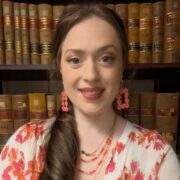
 By
By  By
By 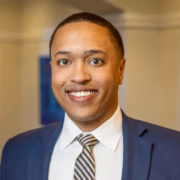 Michael Jones has joined the firm’s Greensboro office as of counsel. His practice is focused on complex litigation, election law, and state and local government law. Before joining the firm, he served as Deputy National Director of Voter Protection and Access on the Harris for President campaign. Jones previously was an attorney in Atlanta and Washington, D.C. Jones has served as an aide to two members of Congress, including former U.S. Senator Kay Hagan of North Carolina. He graduated from the University of North Carolina School of Law and from Yale University, where he received a bachelor’s degree in political science with an Interdisciplinary Concentration in Urban Studies.
 Alicia L. Bray has joined the firm. She has previous experience in defending long-term care facilities, nursing homes, physicians, nurses, and hospitals. Bray is a native of Danville, Virginia. She has more than 14 years in the health care industry in North Carolina. She has litigated insurance defense matters involving premises liability and motor vehicle accidents. She holds a J.D. from Elon University School of Law and received her undergraduate degree in English with a minor in psychology from Averett University, where she graduated magna cum laude.
 By
By  By
By  By
By  By
By