Recognition by the Tax Court That Domestic Abuse Permeates Socioeconomic Strata
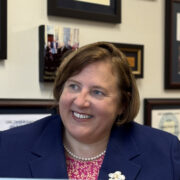
Kim, a white woman with shoulder-length brown hair, wears a pin and orange dress and blue blazer with a small off-white flower pin. She is seated in her office. By Kimberly B. Tyson

The recent “innocent spouse” tax case of Zaheen v. Commissioner, T.C. Memo. 2026-7, is noteworthy in two respects. One, it reminds us that abuse permeates socioeconomic strata. Two, several objective factors in the analytical framework for innocent spouse cases should have precluded relief to the requesting spouse (here, the wife), but because of corroborated testimony of specific acts of abuse, the court held otherwise.

The petitioner in Zaheen was a medical doctor who was abused (mentally, physically, and sexually) for many years by her husband. The record was replete with facts detailing the abuse, including that he strangled her for eating chocolate. The wife requested and was granted equitable relief from a joint tax liability under IRC § 6015(f). Through the lens of a tax practitioner, the wife was relieved of liability from tax liability emanating from the medical practice she co-owned (meaning her own tax liability) with her husband, who was not a medical provider and therefore did not generate income for the practice.

Preliminarily, note that the IRS agreed that the wife was entitled to innocent-spouse relief, but the non-requesting spouse can (and did) intervene. IRC § 6015(e)(4); T.C. Rule 325.

When evaluating whether a requesting spouse is entitled to relief from the couple’s joint tax debt, the IRS and the Tax Court apply multi-factor tests. The income in this case was from a retirement distribution from the medical practice; the distribution was used to pay the debt of the medical practice, and the transaction used a trust over which, at least on paper, both spouses were trustees. Any of these facts normally would preclude innocent-spouse relief. The wife prevailed by proving her husband’s control of the finances, verbal abuse, threats of physical harm, and deceptive tactics to prevent her from learning about the transaction.

Further, two other factors — constructive knowledge and significant benefit — normally would have precluded the wife from relief. For knowledge, the wife constructively knew of the tax understatement: she signed the return and understood that, given her husband’s secrecy and defensiveness, he might not pay the tax. The court nonetheless held that because of the husband’s abuse and control of financial information, the wife’s constructive knowledge did not bar relief. Regarding significant benefit, notwithstanding that the income giving rise to the understatement was used for assets of the medical practice, because the husband shared the practice until the wife filed for divorce, and because the husband controlled the business finances, the wife would not be penalized.

This case deviates from other innocent spouse cases involving abuse because the tax was from the business the wife co-owned and in which she actively participated. See, e.g., Schultz v. Commissioner, T.C. Memo. 2010-233 (relieving the requesting spouse of tax from only the non-requesting spouse’s income); Nihiser v. Commissioner, T.C. Memo. 2008-135 (concluding that the requesting spouse was not liable for tax from the non-requesting spouse’s income where domestic abuse was alleged).

The holding of the case was very clearly a result of the weight of evidence admitted about the substantial and pervasive abuse. Practitioners should counsel their clients about the public nature of the proceeding, the stress of testifying family members, and whether this information is already disclosed in other proceedings, weighing those aspects with the amount at issue in the corresponding tax case.

Mitigating Conflict in Custody Cases with Accessible Alcohol Monitoring Solutions

Chris, a white man with brown hair and brown glasses, wears a light blue shirt and dark grey jacket. By Chris Beck

Family law cases involving alcohol abuse present some of the most challenging issues courts and attorneys face. Allegations of misuse often lead to contested custody battles, heightened conflict, and concerns about child safety. For parents in recovery, proving sobriety consistently can be the difference between restricted visitation and meaningful parenting time.

"A woman with dark hair and glasses is wearing a blue blouse. She holds a phone, and a notification appears that says, "A compliant test was received."

In this context, reliable alcohol monitoring tools have become increasingly important. Courts are turning to technology that provides objective, court-admissible data, allowing judges to make decisions based on facts rather than speculation.

Why Accessibility Matters in Custody Cases

Although technology has advanced, cost has remained a barrier for many families. Traditional alcohol monitoring systems require device purchases that can be difficult for a parent already navigating a costly divorce or custody litigation to absorb. These financial hurdles can limit access to tools that might otherwise protect children, reduce conflict, and rebuild trust.

Recognizing this gap, Soberlink has introduced two new initiatives designed to make alcohol monitoring more accessible:

  1. Device Rentals — Parents can now rent a device for as low as $19 per month when they commit to a 365-day monitoring plan. This option eliminates the upfront cost of purchasing a device, making it easier for families to integrate monitoring into their custody arrangements.
  2. Family Assistance Program — Understanding that custody disputes often place significant financial strain on households, Soberlink has developed a program that provides financial relief to qualifying families. This initiative ensures that cost does not become a barrier to maintaining child safety and supporting indigent parents in recovery.

Balancing Parental Rights and Child Safety

Family law practitioners understand the delicate balance courts must strike between protecting children and preserving parental rights. Allegations of alcohol abuse can quickly escalate into high-conflict disputes, sometimes with little evidence beyond one party’s word against the other.

Alcohol monitoring offers a path forward. By using a system that verifies identity, documents test results in real-time and generate court-admissible reports. Attorneys can present judges with reliable data. This reduces the reliance on hearsay, limits opportunities for false accusations, and provides clarity in otherwise murky cases.

Reducing Conflict and Encouraging Resolution

Beyond the courtroom, alcohol monitoring often serves as a conflict-reduction tool between co-parents. When both parties know there is a neutral, technology-based system in place, the cycle of accusation and denial often diminishes. Parents can focus on their children’s needs rather than rehashing past grievances.

For attorneys, this shift can open the door to settlement rather than protracted litigation. The presence of reliable monitoring data provides reassurance to concerned parents while giving recovering parents the opportunity to demonstrate accountability.

Practical Application in North Carolina Family Law

North Carolina courts, like many others across the country, have broad discretion in fashioning custody and visitation orders. Incorporating alcohol monitoring into parenting plans allows judges to protect children without defaulting to supervised visitation or complete denial of access — both of which can be unnecessarily punitive if the parent is genuinely committed to recovery.

Programs such as Soberlink’s rental option and Family Assistance Program expand access to these alternatives. Attorneys representing either side of a custody dispute can leverage these tools to craft creative, balanced solutions that protect children and preserve relationships.

Looking Ahead

As family law continues to evolve, technology will play an increasing role in bridging the gap between parental rights and child safety. By addressing affordability and accessibility, trusted alcohol monitoring programs like Soberlink’s ensure that reliable alcohol monitoring is no longer limited to those with financial means.

For practitioners in North Carolina, this development represents a meaningful opportunity: to advocate for solutions that are not only legally sound but also practical, compassionate and responsive to the realities families face during custody disputes.

This post has been sponsored by Soberlink

Chris Beck serves as the Vice President of Business Development, Family Law, at Soberlink. 

Child Support Without a Formula: The Art and Evidence of High-Income Cases in North Carolina

By Melissa J. Essick

High-net-worth child support disputes require a blend of financial sophistication and practical evidence. This guide outlines how to prepare and present these cases effectively under North Carolina law.

The Quick Backdrop

As of the 2023 update, if the parents’ combined adjusted gross income is less than $40,000 per month ($480,000/year), the court will presumptively use the North Carolina Child Support Guidelines to calculate child support, which uses “income shares” worksheets (A, B, or C) based on the custody schedule, the parents’ gross incomes, and certain add-ons like health insurance and work-related childcare.

Read more

Rebuilding Bonds: How Reunification Therapy Supports Families in Custody Cases

By Olivia, a woman with dark brown hair, wears a white shirt and dark brown jacket. Olivia Lowery

More than a court order, reunification therapy gives families the chance to rebuild what conflict has broken.

The Human Side of Custody Disputes

In family law, some of the most painful cases aren’t about property or even money—they’re about children who resist contact with a parent. For attorneys and judges, these situations can be incredibly complex. For families, they can be heartbreaking.

Amanda Crowder, LCSW, of Calming Waters Counseling Services, said she was drawn to this work because she wants courts to better understand the mental health dynamics behind custody cases. “This work is special, and it needs to be done well,” she explained. Her colleague, Julianna Elsworth, LCSW, added that at its core, reunification therapy is about “honoring the relationship with both parents,” even when conflict has made that relationship difficult.

Read more

If You’re Not Confused, You’re Not Paying Attention – Updates to N.C.G.S. §50-20

Susan, a woman with auburn hair, wears a blue dress. Ketan, a man with dark brown hair, wears a white shirt and black jacket.By Susan Simos and Ketan Soni

Has everyone heard the big news? No, not how good “The Life of A Showgirl” is or how bad UNC Football is, but that there were edits to our beloved ED statute. Attached are the edits to N.C.G.S §50-20 made pursuant to Session Law 2025-25, effective October 1, 2025. See PDF page 100.

Read more

Make a Splash With Pro Bono

Elysia, a woman with auburn hair and brown eyes, wears a white shirt and blue and white jacket.By Elysia Prendergast-Jones

Join the Pro Bono team in some fun activities this bar year. Jay Jerkins and I, co-chairs of the Pro Bono section, want to welcome you to a new bar year with new opportunities for pro bono work.

Why is pro bono important? The NC State Bar asks each lawyer to commit to providing 50 hours of legal services to those who are unable to pay, according to Rule 6.1, which states in further detail: every lawyer should

“(a) provide a substantial majority of the (50) hours of legal services without fee or expectation of fee to:

(1) persons of limited means;

(2) charitable, religious, civic, community, governmental and educational organizations in matters that are designed primarily to address the needs of persons of limited means; or

(3) individuals, groups or organizations seeking to secure or protect civil rights, civil liberties or public rights, or charitable, religious, civic, community, governmental and
educational organizations in matters in furtherance of their organizational purposes, where the payment of standard legal fees would significantly deplete the organization’s economic resources or would otherwise be inappropriate; Read more

Don’t Miss This Fall’s Intensive CLE in Asheville

Amy, a white woman with shoulder-length blond hair, wears a black blouse and khaki jacket.

By Amy Britt

 Asheville in Peak Season

Who doesn’t want to escape to the mountains in October?

With breathtaking views, vibrant fall colors, and a meeting and social venue at one of Asheville’s premier hotels, you’ll experience a CLE designed to inspire.

🔥 Inside the Intensive CLE

This year’s Intensive CLE, co-planned by Lori Vitale, Kimberly Bryan, and Shelby Benton, promises to be one of the most interactive and dynamic programs we’ve ever offered. The CLE will take place Thursday through Friday, October 23-24, 2025.

We’re bringing together cutting-edge topics (for example, hear from NIL attorneys on child moneymakers and explore how name, image, likeness, and brand impact family law cases), nationally recognized expert speakers, and the kind of candid discussions that only happen when the cameras are off.

And by choosing to be in Asheville this fall, we’re not just investing in our professional growth—we’re also showing up for a community that still needs our support.

Read more

Invitation to Attend “What About the Children?” – 2025 Family Law Fall Program

Susan, a woman with auburn hair, wears a blue dress. By Susan Simos

It’s that time of year again, time for foliage, football, tailgating, and of course, the Family Law Fall Program. This year’s program will take place in Winston-Salem, home of the Wake Forest Demon Deacons, Reynolds America, Krispy Kreme, and Texas Pete. Winston-Salem is also a great place to find fantastic restaurants, unique bars, historic sites and local art, all within walking distance of our host hotel. As a resident of Winston-Salem for 17 years (when did that happen), I write to personally invite you to join us on September 12, 2025, to explore the city, to engage in interesting and insightful CLE topics, and to network and catch up with new and old friends.

We all know the practice of family law can be daunting. I often find myself describing days in court, mediations, or depositions as a slog: fraught with disgruntled parties, contentious opposing counsel, and too much information to be addressed in too little time. And while a positive outcome or a satisfied client certainly goes a long way toward making it all worthwhile, I find the things that keep me engaged are the friendships and camaraderie I have built along the way. I am grateful for the groups of colleagues both close by and across the state who can relate, who can share war stories, who provide insight and suggestions, and who understand the unique challenges of this work. Those relationships, for me, have been forged at annual meetings, fall programs, and intensive seminars. And those relationships – fashioned from that time spent outside of cases and courtrooms with colleagues – make the difficult and adversarial work we do that much more palatable. For those reasons, I encourage you and your colleagues to attend the Family Law Fall Program, in person, in Winston-Salem.

Read more

Welcome to the Family Law Section

By Larissa Mañón Mervin Larissa, a woman with brown hair and gold highlights, wears a navy blue dress and is standing outside.

Dear Members of the NCBA Family Law Section,

Welcome to a new bar year! It is an honor and a privilege to serve as your chair for the upcoming term. I look forward to building on the strong foundation laid by those who came before me and to working alongside all of you as we continue to support excellence in family law practice across our state.

This year, I’m excited to introduce a new initiative: regularly scheduled “lunch & learns” focused on a range of family law topics. These informal, informative sessions will offer opportunities for continuing education, discussion, and community building among our members. I hope these gatherings will become a valuable and accessible resource for all of us, no matter where we are in our practice or our careers.

Read more

How to Create a Watertight Prenuptial Agreement in North Carolina

Olivia, a woman with dark brown hair, wears a black blouse and grey blazer. By Olivia Lane

When you are just beginning in your legal career, drafting a prenuptial agreement for a client may seem like a relatively easy task. Your firm may already have templates or drafts with boilerplate language to pull from, and your client may be happy with a cut-and-paste job. Clients usually do not understand the nuances within contract law, and therefore may not be aware that not all prenups are enforceable. The strength of a prenup is only tested when one party seeks to enforce the agreement. Even a facially valid prenup can be attacked on the basis of enforceability. This article will discuss several common defenses to enforceability, and how to draft a prenuptial agreement that not only contemplates these defenses but protects against them.

North Carolina Law makes it relatively easy for couples to enter into a prenuptial agreement. Almost no formalities are required. In fact, a prenuptial agreement does not require consideration to be binding.[1] North Carolina requires only that the prenup be in writing and signed by both parties,[2] and that both parties possess the capacity to enter a contract[3] and are the age of majority.[4]

While it may seem easy to draft a prenup, not all premarital agreements are created equally. Drafting a watertight prenup first requires knowing where to look for leaks. A solid understanding of common defenses against enforceability will aid in drafting a prenup that will hold up, even when challenged. This article addresses four major ways to attack the enforceability of a prenup: 1) the agreement was not entered voluntarily; 2) the agreement is unconscionable; 3) the agreement violates public Policy; and 4) inadequate financial disclosures.

Read more