
Planting Seeds in the Desert: Interviews with Legal Oasis Interns (Part 4)

In this blog post series, interns who are participating in the Legal Oasis Internship program discuss their participation in the program and why they choose to live and serve in an underserved area. Background on this program can be found in the initial blog post of this series. It is our hope that others will be inspired by these stories.
The fourth post in this series is an interview of Karl Suszynsky, a rising 2L at Campbell Law School. This summer, Karl served as a Legal Oasis Fellow in the chambers of Judge Carlton Terry, Chief District Court Judge in the 33rd Judicial District (Davidson and Davie counties).
The interview was conducted by James S. Perry, a small-town practitioner in Kinston. Mr. Perry is also on the Professionalism Committee with the NCBA and is currently the Executive Director of the Chief Justice Commission on Professionalism.
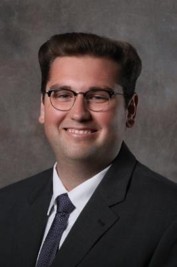
Karl Suszynsky
Where were you raised?
I was raised in Midway, a sleepy little town located in Davidson County, NC. Blink and you will miss it, but it is right, if you could believe it, midway between Lexington and Winston-Salem.
What was your path to law school?
My path to law school started early in high school, at North Davidson High, where I joined Model UN and discovered a real, deep-seated interest in logical debate. My high school never had a mock trial team, so Model UN gave me the taste of debate and adversarial spirit I had been seeking.
After high school, I attended the University of North Carolina at Chapel Hill, where I majored in political science and minored in history and African, African-American Diaspora Studies. Going in, I knew I wanted to go to law school, but being around other students with the same goal and constantly comparing myself to them created doubt in my ability to succeed. I had a rough first year at Carolina and was convinced it would sink my chances. I hunkered down, turned it around and eventually became the undergraduate solicitor general, a position that let me blend my interest in law with my investment in student government and helped me rebuild my confidence.
It was during undergrad that my brother Carson, a personal role model, landed at Campbell Law and found a supportive, collegial atmosphere centered on creating North Carolina lawyers who go back to their communities or stay in the state. That mission drew me in like a moth to a flame, and his endorsement gave me a destination I had not had before.
With Campbell now in my sights, I sat for the LSAT. My confidence dried up all over again, and I felt hopeless. But I was not willing to give up on my dream that early in the game, so I studied and took it again. When my score came back, I felt empowered to apply. Later that same cycle, I was admitted into the Campbell Law Class of 2028.
Why did you go to law school?
One of the first tips I heard in my first-year property course was “Anytime there is the same surname on the different sides of the v.’ everyone is unhappy.” Having lived the unspoken part of that truth, I believe it only covers half of the story. Whether it is for a family matter or perhaps a 50B or C, getting to court does not happen frequently because people are either unaware of the legal avenues available to them or are unable to adequately take advantage of the legal routes to personal protection or stability. No matter the reason, people are too often left to suffer in silence because they do not know of another way to survive.
I grew up as a child of divorce and, like many others, was caught between bouts of domestic violence. What started between my parents regularly spilled over onto my siblings and me. The most memorable incident happened in sixth grade, when my parents collided in a confrontation at my father’s house that began, as many of their arguments did, over differences in parenting and escalated from there.
I had nowhere to go. I stepped between my parents and was hit by blows meant for the other. Several moments passed before they realized what they had done, and even then the fighting did not stop. Both called the sheriff on the other, and yet nothing was done. I have often wondered how things might have been different had someone intervened, whether that was DSS, a sheriff willing to act or an attorney fighting for a custody arrangement that kept us out of the crossfire. No one did, and we were left to navigate it alone.
My situation did not get better for some years, but eventually the storm passed. The feelings of hopelessness and helplessness that defined that period of my life have never fully left me, and I do not think they ever will. But I do not let my past control me. Those experiences shaped who I am, and I have chosen to let them push me forward rather than hold me back.
So, why law school? I chose law school because I intend to use those experiences in service to others. My situation is not unique across this state, and I am dedicated to doing everything I can to ensure that fewer families go through what mine did. Attorneys are a privileged class, and the knowledge they hold is a powerful tool that changes lives. That knowledge, put to use in the right places, is exactly what communities like mine have been missing.
When you went to law school, did you have any intention of returning to your home community?
Going back to my hometown never crossed my mind going into law school. When I left home, I was fresh into undergrad and thought that I would only ever return home for holidays and reunions. I never got the chance to reevaluate when I went into law school because I went straight through from my undergraduate. However, I have completely changed my mind. After spending the summer back home in the community and interacting with small-town life compared to a busier Raleigh, I am drawn back home more now than ever. Small-town life lives up to its reputation; the pace is slower and space is wider, but importantly, people seem genuinely invested in one another in a way that gets lost in a bigger city. That sense of community is something I did not fully appreciate until I had something to compare it to.
What is it like interviewing for summer Internships in a smaller community?
Interviewing in a small town is unique because it might be one of the only settings where one gets denied a position at one firm but leaves with a positive reference for another firm in the area. However, that same closeness carries a burden. Small-town attorneys talk. It is important to remember that just because a smaller firm may be less formal or have fewer resources than a large firm, the interview deserves the same preparation and polish regardless of the setting. Small and large, they all look for a passionate and polished applicant.
What are you doing this summer?
This summer, I am a Legal Oasis Fellow interning for the Chief District Court Judge, Carlton Terry, of District 33 (Davidson and Davie Counties). The Legal Oasis Fellowship is designed to draw law students into smaller communities that would otherwise become legal deserts, where access to legal representation is scarce.
Could you share what your experience has been like this summer?
This summer has been, perhaps, the best learning experience possible for a rising 2L. Coming out of my first year, I was familiar with the basic courses such as civil procedure, torts and criminal law. However, it is one thing to learn doctrine in a lecture hall and another thing entirely to observe it from the top-down view of the bench. In this position, I have been able to see both sides of the criminal and civil process play out in real time.
My experience this summer breaks down into three key aspects: observing, drafting and discussion. A majority of my day is spent sitting in the jury box, or if there is room, on the bench with the judge, watching how they preside over the court. At the end of the day, I bring a list of questions to the judge, and we discuss the things I observed. On drafting, while I am not tasked with it every day, I will often work on research memos or draft sample orders for cases the judge has heard, then compare and discuss them with the judge for revision and polish. Finally, Judge Terry spends time discussing legal topics that are both doctrinal and present in current media, and I am privileged to be part of those conversations. His twenty years on the bench have given him both a mastery of the law and a perspective that I am honored to learn from.
This summer has reinforced two things for me: there is no substitute for watching the law unfold in a courtroom, and there is a desperate need for attorneys in small towns.
Do you have some idea as to what type of law you eventually would like to practice?
I am drawn to practice family law and general civil litigation.
Why are you drawn towards those types of practice areas?
Growing up the way I did, I know firsthand what it feels like to need legal protection and have no path to it. Family law and civil litigation are where everyday people need help the most, and in smaller communities, that help is nearly impossible to find. My lived experience is what drives me toward this work.
What are your long-term future hopes and dreams for your law practice and for living in a smaller community?
Long term, I hope to return to my community and establish a practice that offers representation on a sliding scale, so that cost is not the reason someone goes without help. Beyond that, I want to be a consistent and reliable presence in Davidson County, the kind of attorney people know they can come to.