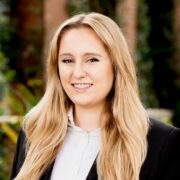
I have always had an interest in public service. My journey to the New Hanover County Attorney’s Office started as a staff attorney for Legal Aid of North Carolina. From there, I served stints as an assistant district attorney and as a staff attorney for New Hanover County Department of Social Services (DSS) before joining the County Attorney’s Office.
I have been a litigator for my entire career. My path crossed with former New Hanover Deputy County Attorney Sharon Huffman while I was with DSS, and I was intrigued. I was not sure what a county attorney’s role entailed, so I made a cold call to New Hanover County Attorney Wanda Copley, who spent forty years in that position.
https://ncbarblogprod.wpengine.com/wp-content/uploads/2018/06/Blog-Header-1-1030x530.png00GovernmentandPublicSectorhttps://ncbarblogprod.wpengine.com/wp-content/uploads/2018/06/Blog-Header-1-1030x530.pngGovernmentandPublicSector2024-06-27 15:11:072024-06-27 15:11:07A Litigator at Heart Finds a Great Fit Working for a County
On June 21, 2024, Margaret “Peggy” Pardue was recognized as the 2024 Distinguished Paralegal Award recipient by the North Carolina Bar Association (“NCBA”).
Pardue was nominated by Kristin Hampson, her attorney for whom she has spent the past 21 years supporting at Hampson Family Law in Raleigh. Hampson was proud to nominate Pardue for a well-deserved award.
Recently seen on Hampson Family Law’s Facebook post was the following description of Pardue’s role:
“An ear to listen . . .
A heart to help . . .
An eFile phenom . . .
An organizing beast . . .
A schedule master . . .
A document demander (but in the nicest way) . . .
A client wrangler . . .
An all-around irreplaceable and amazing paralegal . . .
Young Moore and Henderson, P.A. Welcomes New Associate
Ash C. Giri is now an associate with the firm, and he will represent clients in civil litigation matters. Giri has prior experience in workers’ compensation law, and with Legal Aid of North Carolina, where he handled landlord-tenant cases. He received his J.D., cum laude, from Campbell Law School. He served as the executive editor and bluebook editor of Campbell Law Review and president of the Business Law Association. He holds a bachelor’s degree in English from the University of Minnesota.
Each year, the NCBA Environment, Energy and Natural Resources Section Council hosts an essay contest for high school students across the state centered on the theme of sustainability. This year’s contest focused on the role geoengineering could play in reducing global warming and offsetting some of the impacts of climate change. Specifically, we sent out invitations to all high schools in the state inviting their students to respond to the following prompt:
“Geoengineering” refers to emerging technologies that could manipulate the environment and partially reduce global warming and offset some of the impacts of climate change. What geoengineering technologies are most promising? What are the pros and cons of each? How might we address some of the challenges you have identified?
The winners of the contest receive the chance to be published on NCBarBlog, and the top three winners are awarded cash prizes. This year’s winners and the links to their essays are below.
First Place ($500 prize): Dara Adegoroye
Essay title: “The Future of Geoengineering and Earth’s Atmosphere”
Dara is a rising high school junior at the Early College at Guilford, in Greensboro.
Second Place ($250 prize): Susan Anderson
Essay title: “Geoengineering Against Climate Change”
Susan is a rising high school senior at Polk County Early College in Columbus.
Linda Miles is humble about the remarkable impact she has made on the practice of law in North Carolina. She constantly looks to find success, for her clients and for others, and she is a beacon of light for all. Her professionalism, quiet excellence and demonstration of strength over her 50-year career are goals every attorney should strive to achieve.
Linda has represented local governments for over 50 years. She recently retired as the attorney for the Cape Fear Public Utility Authority (CFPUA), where she served for 15 years. Before CFPUA, Linda served the City of Greensboro for over 30 years, including her role as City Attorney from 1999 through 2007. Linda was the first woman appointed to the position of City Attorney in North Carolina. Her other notable service for local governments includes representing the towns of Granite Quarry, Rockwell, and Faith, as well as the Rowan County Department of Social Services.
I. 2023 Audit Statistics; Chances of Being Audited.
The 2023 Internal Revenue Service Data Book released in April 2024 contains audit statistics for years 2013 through 2021, as of the fiscal year ended September 30, 2023 (FY 2023). For years before 2020, the statute of limitations had generally expired as of September 30, 2023. However, for 2020 and later returns, the statute of limitations has yet to expire, so additional returns for those years may be audited.
For 2013 through 2021, audit rates dropped significantly. For example, individual tax returns had an audit rate of 0.6% for 2013 returns versus 0.2% for 2021. For individuals with income between $1 million and $5 million, the audit rate dropped from 3% for 2013 returns to 0.5% for 2021 returns.
The overall audit rate for C corporations dropped from 1.2% for 2013 returns to 0.3% for 2021 returns. For partnerships and S corporations, the audit rate for 2013 returns was 0.3% compared to 0.1% for 2021 returns.
A partnership may elect to adjust its inside basis under Sections 734(b) and 743(b) by making a Section 754 election with the partnership’s annual tax return. The basis adjustment occurs, however, only when there is (1) a distribution of partnership property or (2) a transfer of partnership interest. 754 elections can be extremely valuable because they provide the possibility of an increase in the inside basis of partnership assets.
If a 754 election is made, when a partnership distributes property to a partner, the partnership’s inside basis is increased pursuant to Section 734(b), by (A) gain recognized by the distributee partner and (B) in the case of non-liquidating distributions of property other than money, by the excess of the adjusted basis of the distributed property to the partnership over the basis of the distributed property to the distributee. Similarly, a partnership’s inside basis is decreased by (A) loss recognized to the distributee partner and (B) in the case of liquidating distributions of property other than money, by the excess of the basis of the distributed property to the distributee over the adjusted basis of the distributed property to the partnership.
The North Carolina Supreme Court recently missed an opportunity to write a meaty opinion on insurance policies’ “Coverage B” provisions that insurance practitioners regularly debate. In North Carolina Farm Bureau Mut. Ins. Co. v. Lanier Law Group, P.A., 277 N.C. App. 605, 861 S.E.2d 565 (2021), aff’d per curiam, __ N.C. __, 898 S.E.2d 279 (2024) (“Lanier”), the parties ably teed up multiple issues of first impression involving Coverage B of an excess business liability policy. However, instead of addressing the issues head-on, the Court voted 3-3 to affirm an unsatisfying ruling from the Court of Appeals based on a single exclusion, thereby setting no precedent and giving no guidance for future disputes involving Coverage B.
The central question in Lanier was whether a law firm’s excess business policy liability obligated an insurer to defend against allegations that the firm violated the Driver’s Privacy Protection Act of 1994, 18 U.S.C., § 2721 et seq. (“DPPA”). Lanier Law Group (“LLG”), a firm focused on plaintiffs’ personal injury cases, was one of many firms in the state that culled accident reports and used the information they collected to contact potential clients (i.e., accident victims) about legal services through direct mail. In 2016, LLG and other firms were named as defendants in a putative class-action lawsuit in the Middle District of North Carolina. Garey v. James S. Farrin, Case No. 1:16-cv-00542-LCB-JLW (“Garey”). The Garey plaintiffs alleged that the law firm defendants obtained and used their “protected personal information” without their consent. Fundamental to the plaintiffs’ claims was the allegation that LLG “knowingly” violated the statute. The Garey complaint was replete with allegations that LLG “knowingly obtained, disclosed and used Plaintiffs’ personal information from a motor vehicle record” in violation of the DPPA. Lanier, 277 N.C. App. at 606-07, 861 S.E.2d at 566-67.
https://ncbarblogprod.wpengine.com/wp-content/uploads/2018/06/Blog-Header-1-1030x530.png00InsuranceLawhttps://ncbarblogprod.wpengine.com/wp-content/uploads/2018/06/Blog-Header-1-1030x530.pngInsuranceLaw2024-06-18 11:09:182024-06-18 11:09:18NCFB v. Lanier Law Group: Much Activity, But No Progress for "Coverage B" Insurance Law
Externs. What are they? Why should your organization consider being a placement site for them? And, what are things to keep in mind when serving as such a placement site? Keep reading to find out!
What are “externs” (and how do they differ from “interns”)?
The American Bar Association (“ABA”) defines the term as follows: “Externships are non-compensated positions in settings outside a law school, for which students receive academic credit.” The receipt of academic credit seems to be at the core of what makes an extern an extern, so that is what appears to be their defining feature and what sets them apart from traditional interns. As a result, the answer I give when asked how externs differ from interns is that “an extern is an intern that is paid in experience.”
While we are on the subject of definitions, I want to clarify the meanings of the terms “externship program” and “externship placement program” as I use them. “Externship programs” are the programs through which law schools offer law students the opportunity to be externs and the academic credit externs receive. “Externship placement programs” are the programs organizations set up to host externs within their organizations.
https://ncbarblogprod.wpengine.com/wp-content/uploads/2018/06/Blog-Header-1-1030x530.png00GovernmentandPublicSectorhttps://ncbarblogprod.wpengine.com/wp-content/uploads/2018/06/Blog-Header-1-1030x530.pngGovernmentandPublicSector2024-06-18 10:21:052024-06-18 10:51:28Externs! Externs! Read All About Them!
By Peggy Pardueon behalf of the Communications Committee
The North Carolina Bar Association’s Pro Bono Committee announced the winner of its Outstanding Paralegal Pro Bono Service Award, which recognizes a paralegal who has proven to be dedicated to providing pro bono legal services. The qualifications for this award include volunteering “a substantial amount of time in pro bono legal service to increase access to justice.”
This year at the NCBA Annual Meeting on Friday, June 21, Andrea M. Blosser, a paralegal with Robinson Bradshaw, will receive the award.
https://ncbarblogprod.wpengine.com/wp-content/uploads/2018/06/Blog-Header-1-1030x530.png00Paralegalshttps://ncbarblogprod.wpengine.com/wp-content/uploads/2018/06/Blog-Header-1-1030x530.pngParalegals2024-06-17 14:36:542024-06-17 14:36:54Outstanding Paralegal Pro Bono Service Award Winner: Andrea M. Blosser

 By
By  On June 21, 2024,
  Ash C. Giri is now an associate with the firm, and he will represent clients in civil litigation matters. Giri has prior experience in workers’ compensation law, and with Legal Aid of North Carolina, where he handled landlord-tenant cases. He received his J.D., cum laude, from Campbell Law School. He served as the executive editor and bluebook editor of Campbell Law Review and president of the Business Law Association. He holds a bachelor’s degree in English from the University of Minnesota.
 By
By 
 By
By 
 By
By 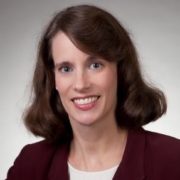 By
By  By
By 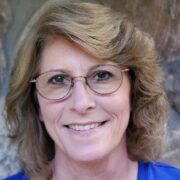 By
By